In this guide
Coverage is a chain: swath × speed × efficiency, constrained by tank, refill time and battery swaps. This article shows the calculation and the variables that break it.
Application
A spraying drone listing usually leads with tank size and maximum flow. Those numbers matter, but they do not tell you how many hectares you will finish in a day.
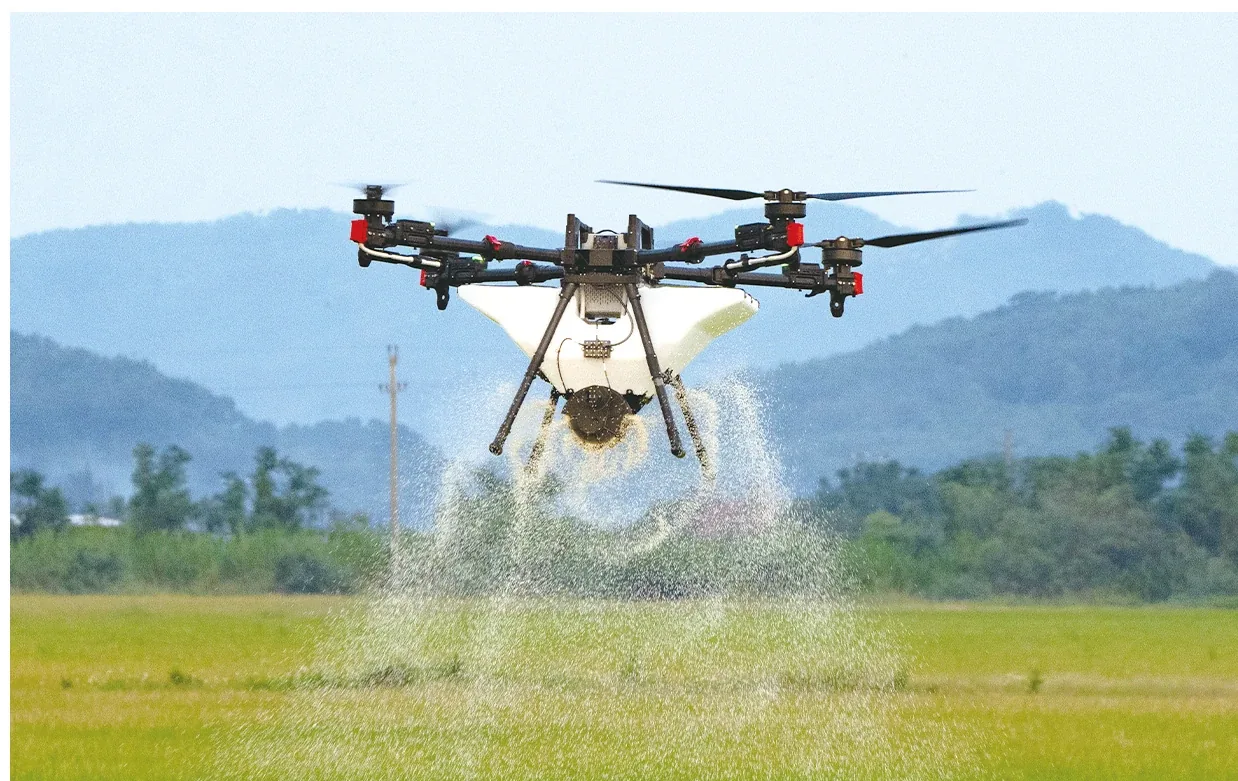
Quick answer
Theoretical coverage is swath × speed × 0.36: a 6 m swath at 6 m/s gives about 13 ha/h, or about 9 ha/h at 70% field efficiency. A 70 L tank at 60 L/ha covers about 1.2 ha per fill; refill distance and battery swaps often decide the real day.
In this guide
Coverage is a chain: swath × speed × efficiency, constrained by tank, refill time and battery swaps. This article shows the calculation and the variables that break it.
Formula
Theoretical hectares per hour = effective swath (m) × speed (m/s) × 0.36. A 6 m swath at 6 m/s gives about 13 ha/h before turns, refills and battery swaps.
Multiply by field efficiency to get a realistic planning number. If efficiency is 70%, the same pass gives about 9 ha/h. Real output can still be lower in small or obstructed blocks.
Tank
Hectares per tank = tank (L) ÷ application rate (L/ha). A 70 L tank at 60 L/ha covers about 1.2 ha per fill. If the refill loop takes ten minutes, the tank size is no longer the bottleneck — the loop is.
| Variable | Effect |
|---|---|
| Tank size | More hectares per fill, but more weight and product on board |
| Application rate | Higher rate reduces hectares per tank |
| Refill distance | Long loops erase the benefit of a larger tank |
| Flow rate | Higher flow finishes the tank faster, but can change droplet spectrum |
| Swath | Wider swath increases coverage, but overlap and terrain limit it |
Droplets
Droplet size determines how the spray behaves in the canopy and wind. Smaller droplets increase coverage but raise drift risk. Larger droplets reduce drift but may not penetrate dense canopy.
Speed increases hectares per hour but changes airflow and coverage. The right speed is the one that keeps the deposit even, not the highest number in the manual.
Batteries
Battery count follows hectares per hour, pack capacity, charging time and whether you charge in the field. Plan the rotation before the season; a second pack is cheaper than a lost spray window.
Measure
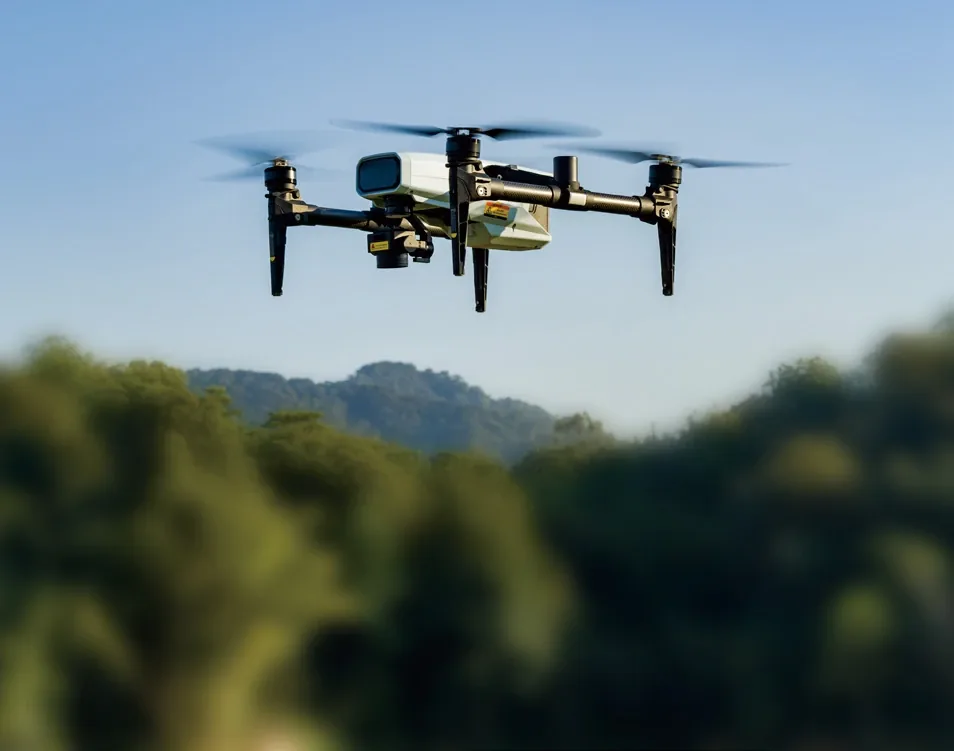
Even coverage, not maximum speed, is the target.
Use the formula to narrow the configuration, then measure on your block. Record time per tank, refill time, battery swaps, turns and actual area covered. That record is more useful than any published maximum.
The coverage calculator on this site applies the same formula with your inputs.
Key takeaways
Related guides
Most agricultural drone comparisons start with payload. That is the wrong first question. The right first question is: which job do you need to repeat, on which blocks, with what support?
ApplicationThe honest answer is: it depends on swath, speed, field efficiency, tank and refill logistics. The useful answer is a calculation you can run on your own block.
ApplicationDrone spraying is not a universal replacement for a sprayer. It wins in specific conditions: soft ground, narrow windows, small or fragmented blocks and canopies that need airflow.
Next step
Send the tank, rate, swath and block shape. We will review the calculation against a field demonstration.