Agricultural drones
Agricultural Drone — Spraying, Seeding and Crop Mapping
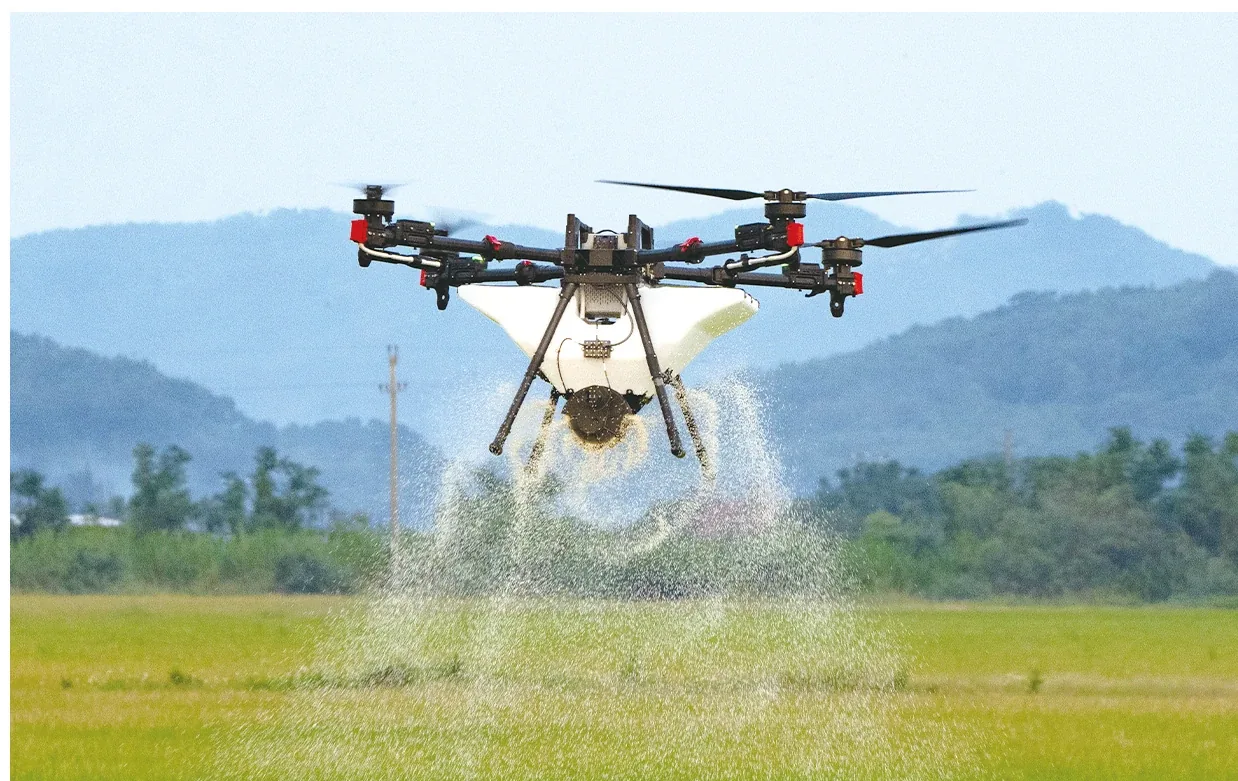
An agricultural drone is a task platform. The same airframe can spray a liquid, spread a granule or seed, and map the field — provided the task modules, battery logistics and service support are configured for the crop.
Quick answer
An agricultural drone applies liquid inputs, spreads granules or seed, and maps fields. The XAG P150 carries a 70 L tank and 115 L hopper, sprays up to 30 L/min and spreads up to 280 kg/min. We supply P150 and P60 factory-direct as an authorized XAG distributor.
Overview
This page covers the three jobs, how to choose between the P150 and P60, the crops we see most often, and the workflow that keeps an aircraft productive through the season.
Specifications
System specifications
P150 airframe
- Maximum payload
- 70 kg
- Liquid tank
- 70 L
- Granule hopper
- 115 L
- Aircraft weight
- 54 kg spraying / 58 kg spreading
- Protection rating
- IPX6K
P150 application
- Maximum flow
- 30 L/min
- Effective spray width
- 5–10 m
- Droplet size
- 60–400 µm
- Maximum spread rate
- 280 kg/min
- Effective spread width
- 8 m
P150 flight
- Hovering precision
- RTK ±10 cm
- Maximum speed
- 18 m/s
- Maximum height
- 30 m
- Operating temperature
- 0–40 °C
- Mapping efficiency
- 13.3 ha per flight (RealTerra 3)
Supply
- Models
- XAG P150 / P60
- Manufacturer
- XAG
- Supply model
- Authorized distributor
- Training
- Operator and technician training
- Delivery and order size
- Tailored to your order
Capabilities
What can an agricultural drone do?
Spraying, spreading and mapping are task modules, not separate aircraft. That matters for capital cost, transport and the number of batteries you need to keep in rotation.
- Spraying: liquid crop protection, foliar nutrition and desiccants.
- Spreading: fertiliser, seed, aquacultural feed and powder.
- Mapping: field boundaries, rows, obstacles and crop indices.
Model selection
P150 or P60: which one fits?
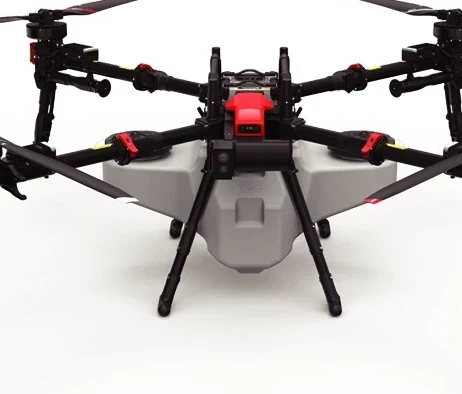
P150 is the high-throughput platform; P60 is the compact option for smaller or fragmented plots.
The P150 is the high-throughput platform for larger blocks and contractors. The P60 is the compact option for smaller or fragmented plots where transport and manoeuvrability matter more than maximum output.
Choose by daily hectares, refill distance and transport, not by the largest number in the table. A larger tank is only useful if you can refill it quickly.
| Consideration | P150 | P60 |
|---|---|---|
| Payload | 70 kg | Ask our team |
| Liquid tank | 70 L | Ask our team |
| Granule hopper | 115 L | Ask our team |
| Max spray flow | 30 L/min | Ask our team |
| Max spread rate | 280 kg/min | Ask our team |
| Best fit | Large blocks, contractors, high daily output | Small or fragmented plots, mixed farms |
Crops
Which crops does it suit?
| Crop | Typical operation | What to plan |
|---|---|---|
| Rice | Direct seeding, spraying, top-dressing | Bunds, water depth, weed timing |
| Sugarcane | Spraying, fertiliser, ripener | Tall canopy, row spacing, wind |
| Oil palm | Orchard spraying, spreading | Canopy height, terrain, buffer zones |
| Orchard / vineyard | Canopy spraying, ground robot support | Row width, canopy density, slope |
| Cotton | Spraying, defoliation, mapping | Growth stage, drift, neighbour fields |
| Wheat / corn / soybean | Spraying, spreading, mapping | Window, wind, headland space |
| Vegetables | Spraying, fertigation | Frequent small doses, residue limits |
Workflow
What does a field workflow look like?
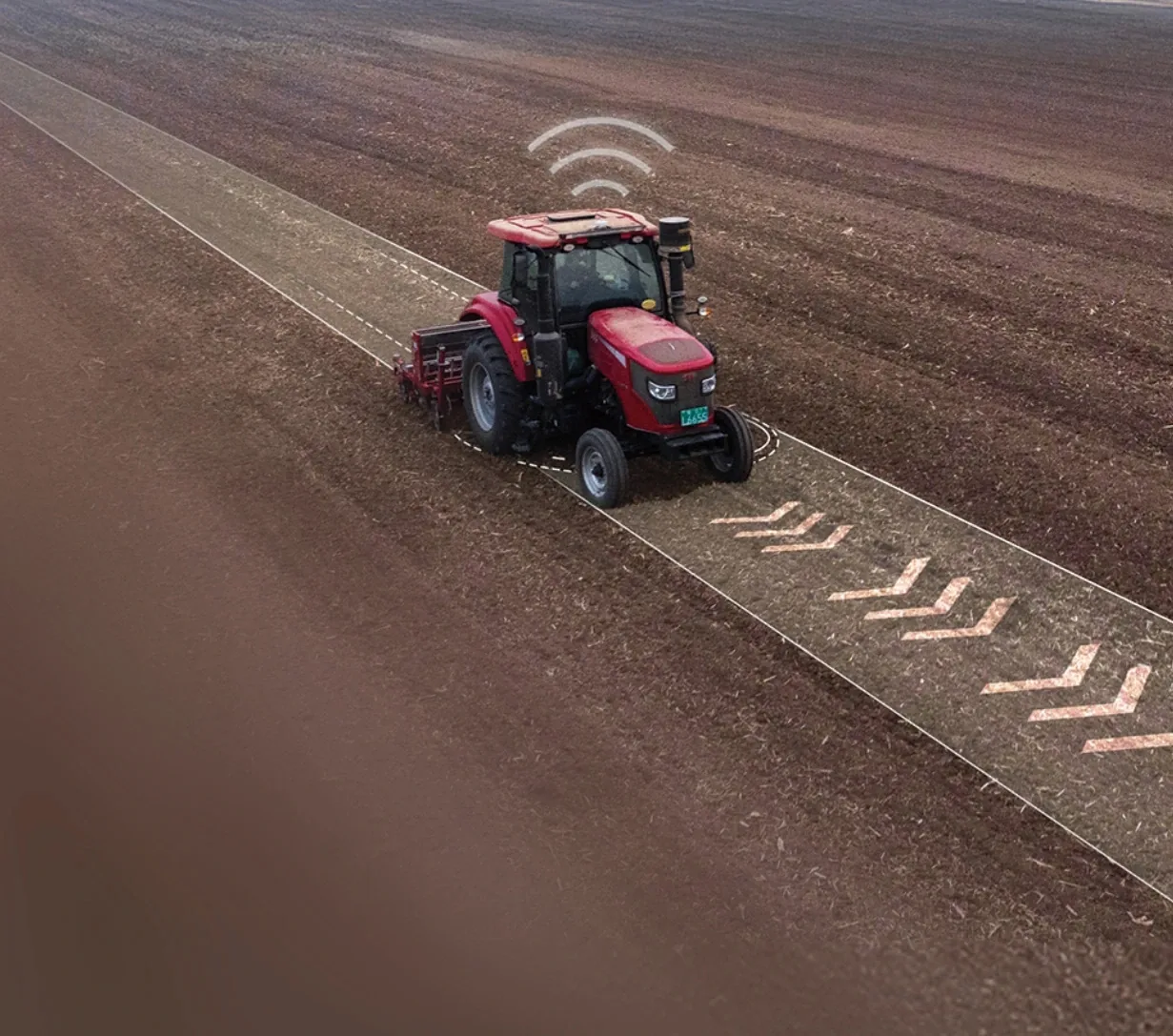
Map, plan, refill, fly and record: the aircraft is one part of a repeatable workflow.
The aircraft is one part of the workflow. The rest is mapping, refill points, battery rotation, cleaning and records. Set these before the season, not during the first busy week.
- Map the block once; reuse boundaries and obstacle marks.
- Set refill and battery-swap points at the headland.
- Record product, rate, area and weather for each pass.
- Clean the tank and nozzles at the end of each product.
- Review coverage and overlaps before the next block.
Support
What support comes with the system?
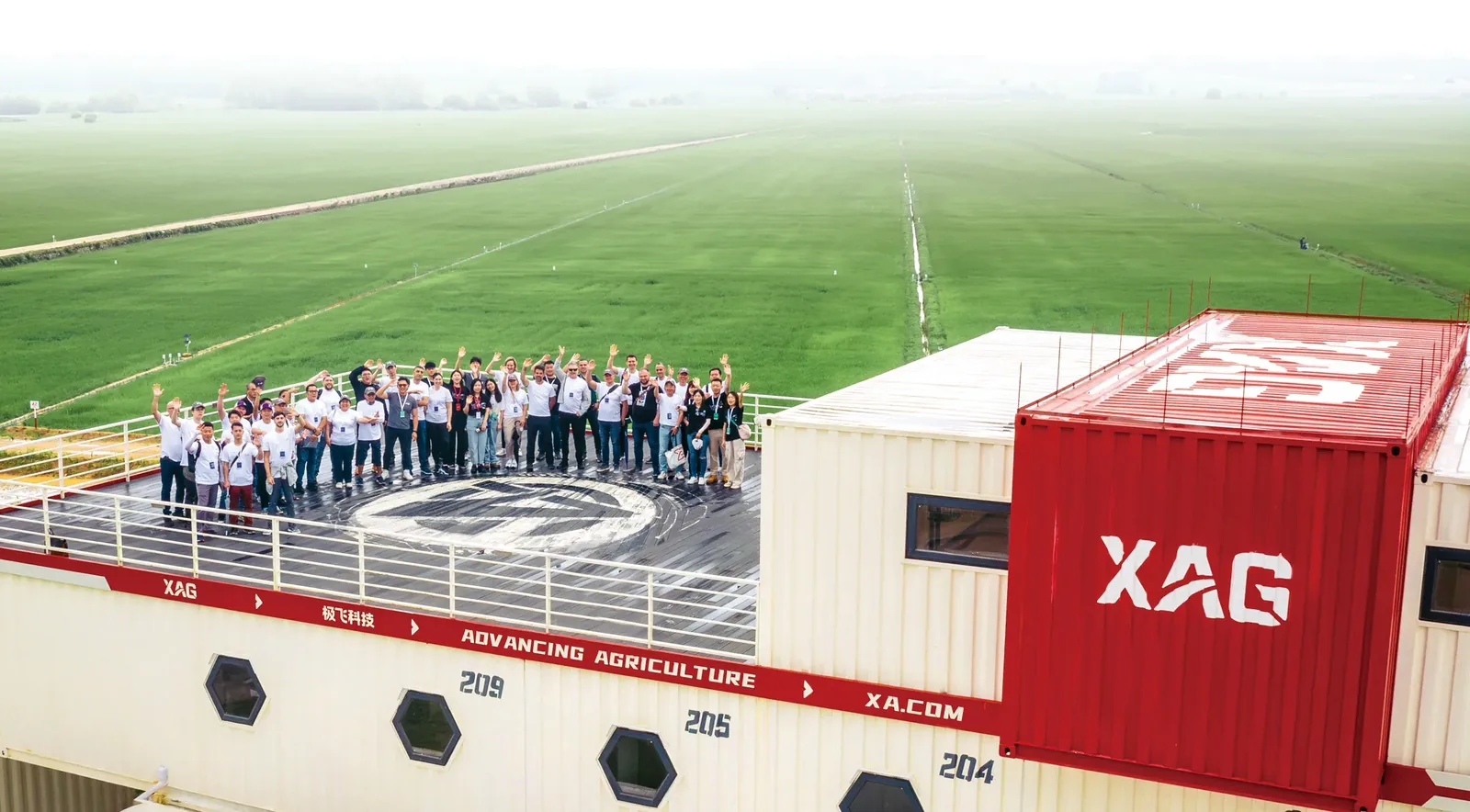
Operator training and spare parts are part of every system package.
Agricultural drones work in dust, heat and chemicals. Service access is part of the purchase decision. We supply through the authorized XAG network with operator training, genuine parts and technical support.
FAQ
Questions buyers ask
What can an agricultural drone do?
It can spray liquid crop protection and nutrition, spread fertiliser or seed, and map field boundaries and crop conditions. The task modules are swapped on the same airframe.
How do I choose between P150 and P60?
Choose by daily hectares, block size, transport and refill logistics. P150 is the high-throughput platform; P60 is the compact option for smaller or fragmented plots.
How many hectares can it cover per hour?
Coverage depends on speed, swath, turn time, refill and battery swaps. Use the maximum flow and swath as a starting point, then confirm with a field demonstration on your block.
Can it spread seed and fertiliser?
Yes. The granule hopper and spreader handle fertiliser, seed, aquacultural feed and powder. The P150 hopper is 115 L with a maximum spread rate of 280 kg/min.
Do I need RTK?
RTK gives centimetre-level repeatability and reduces overlap. Without RTK, accuracy drops to metre level and more manual correction is needed, especially on narrow rows.
What about batteries and charging?
Plan battery count around your daily hectares and charging time. The exact pack, charger and rotation plan are part of the configuration and quotation.
Is it legal to spray with a drone?
Rules vary by country and product. Registration, operator certification and spraying approvals may apply. Confirm with your local authority before operation.
What crops is it suitable for?
Rice, sugarcane, oil palm, orchards, vineyards, cotton, wheat, corn, soybean and vegetables are common. The right height, droplet size and rate depend on the canopy and product label.
What support comes with the system?
Configuration, commissioning, operator training, documentation and genuine spare parts through the authorized network. Warranty and response terms are set out in your quotation.
Next step
Configure an agricultural drone for your crop.
Tell us the crop, block size, terrain and country. We will recommend P150 or P60 and send a quotation covering what is included.